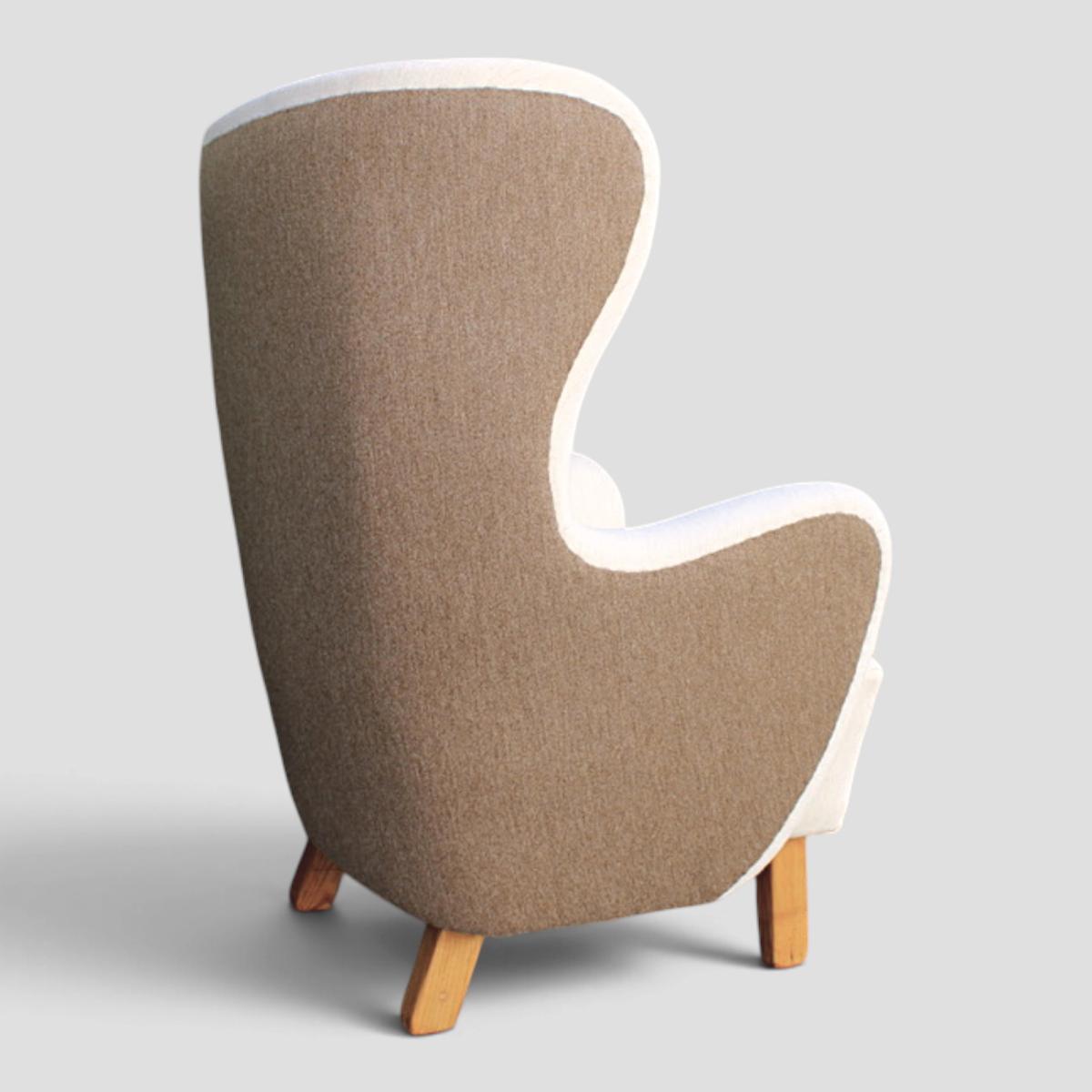
Kay Fisker
DFDS chair
1936
| H | 104 CM / 40.9" |
| W | 72 CM / 28.3" |
| D | 73 CM / 28.7" |
| Seat Height | 42 CM / 16.5" |
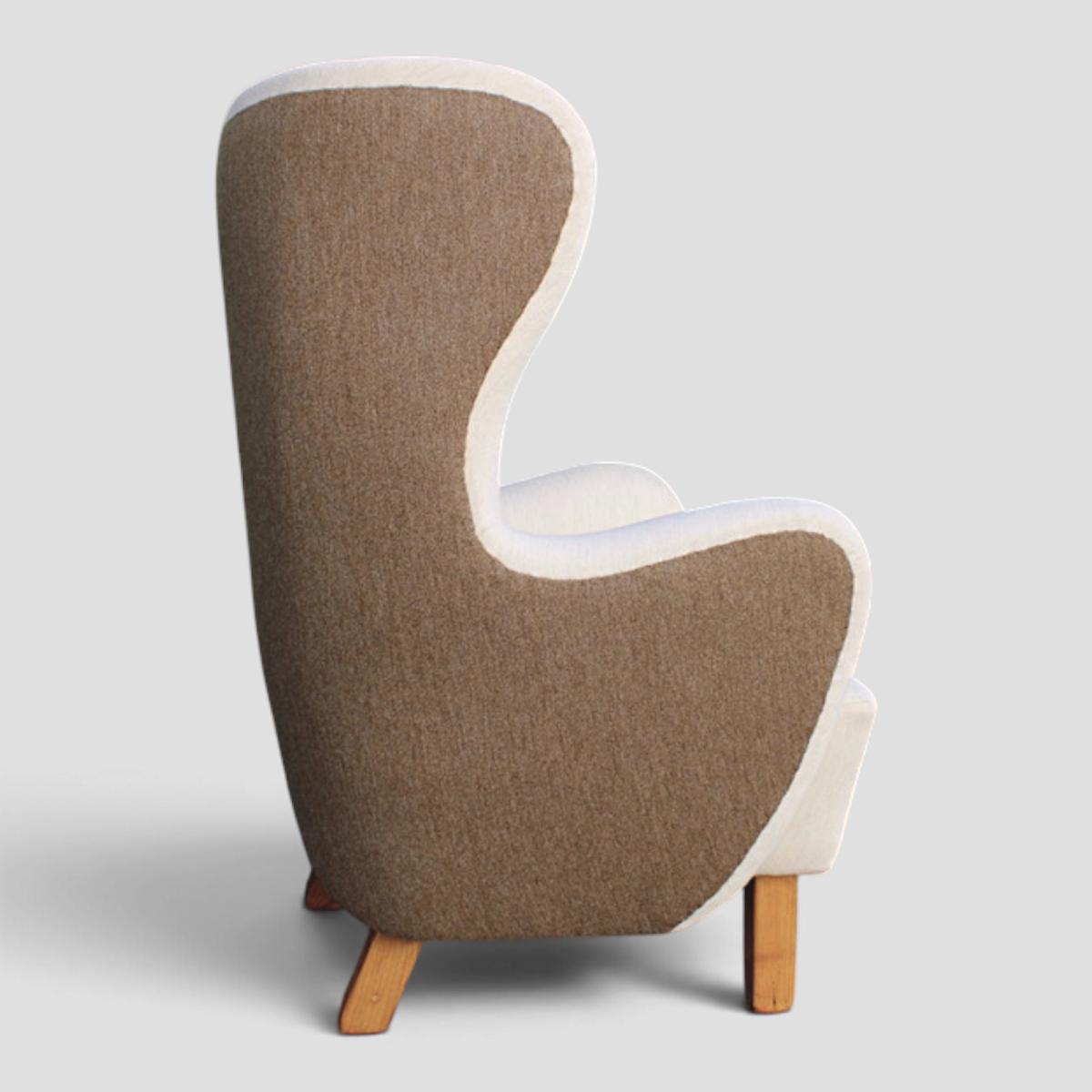
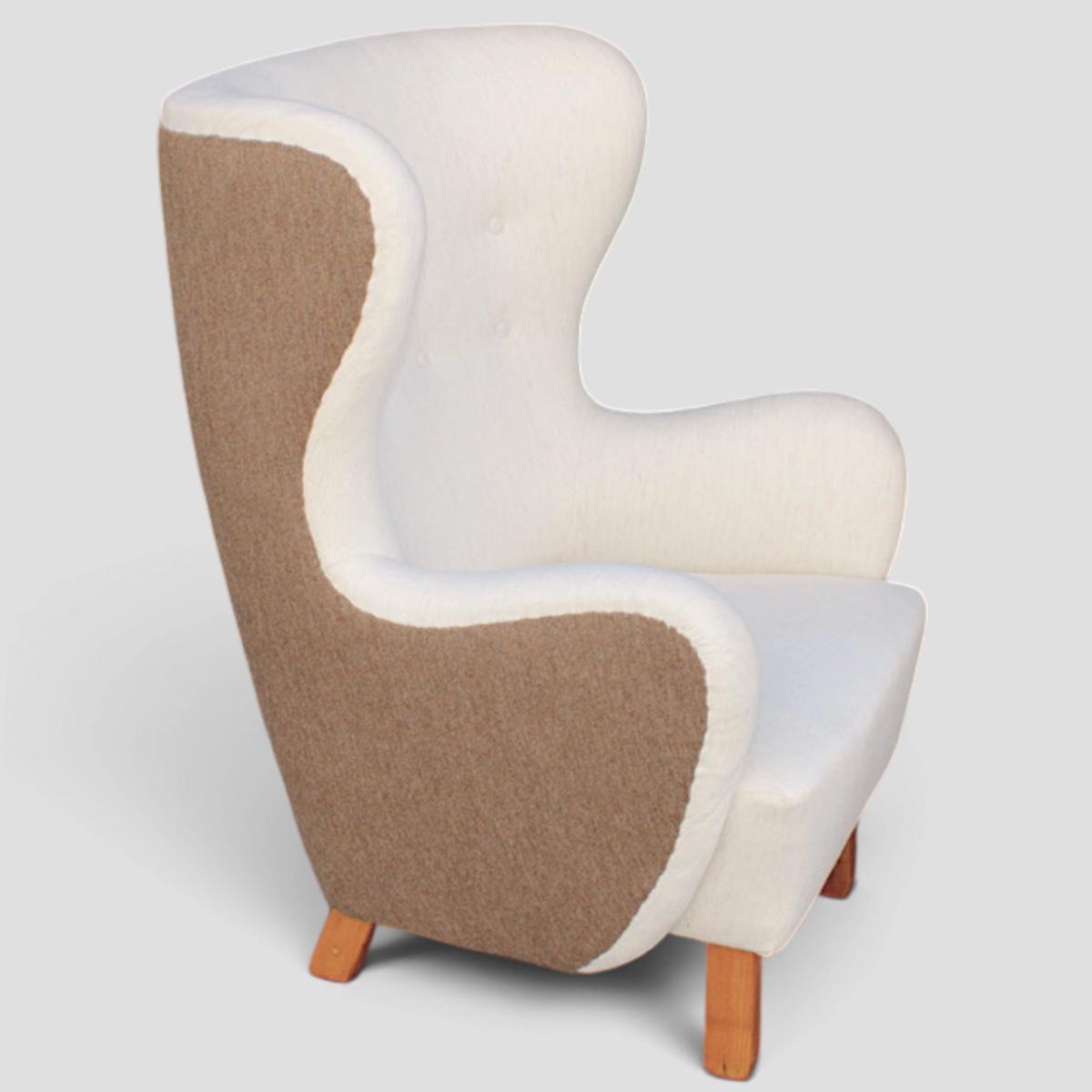
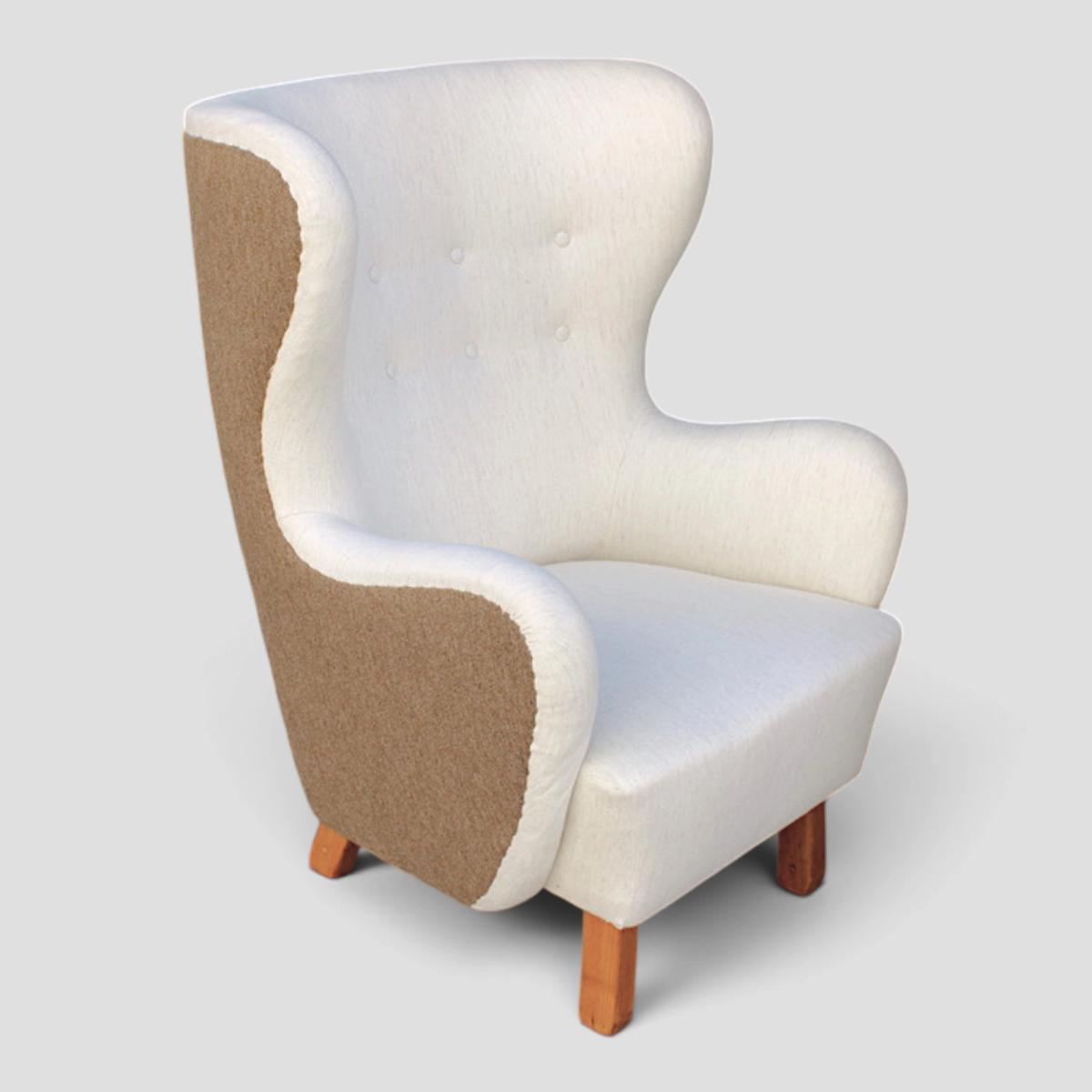
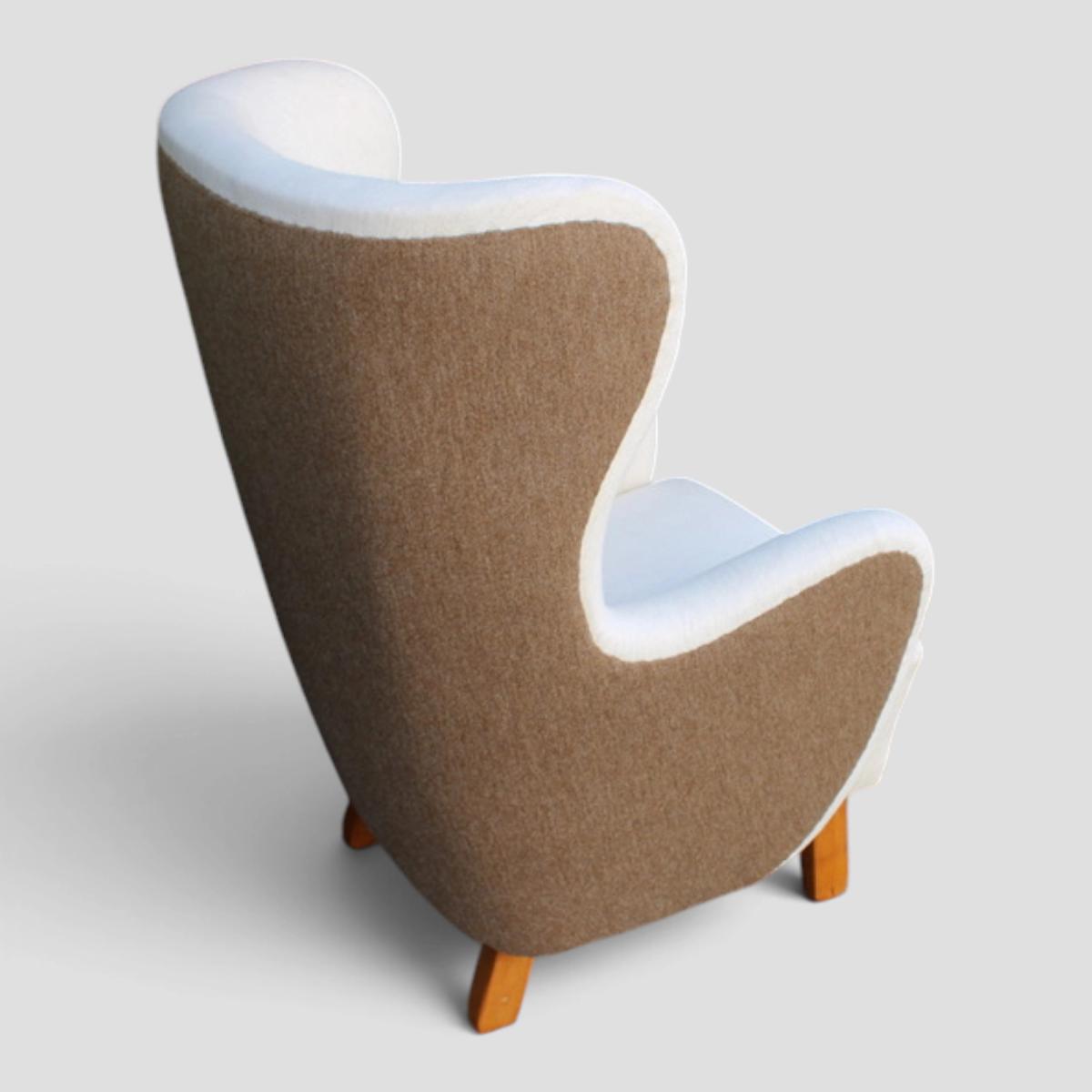
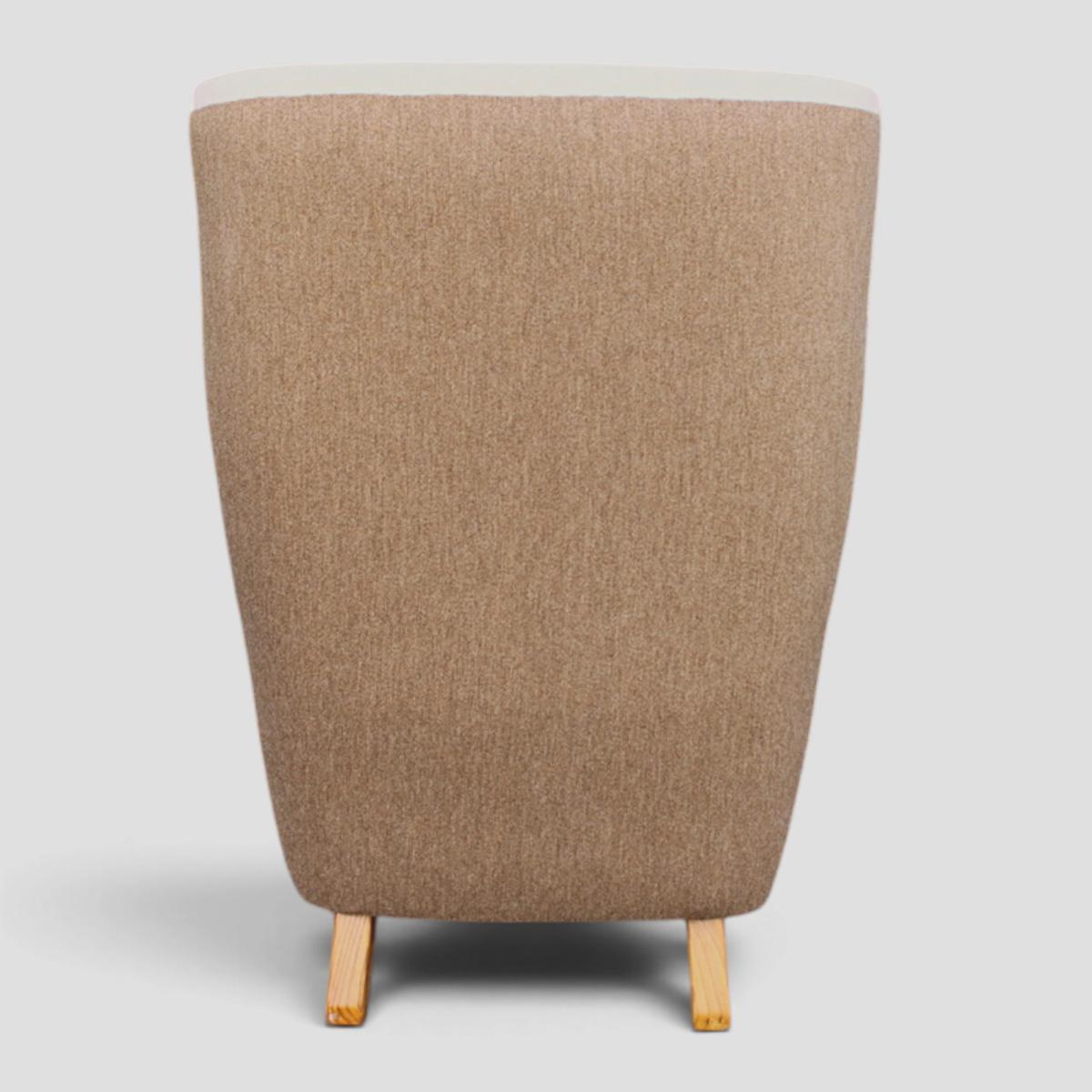
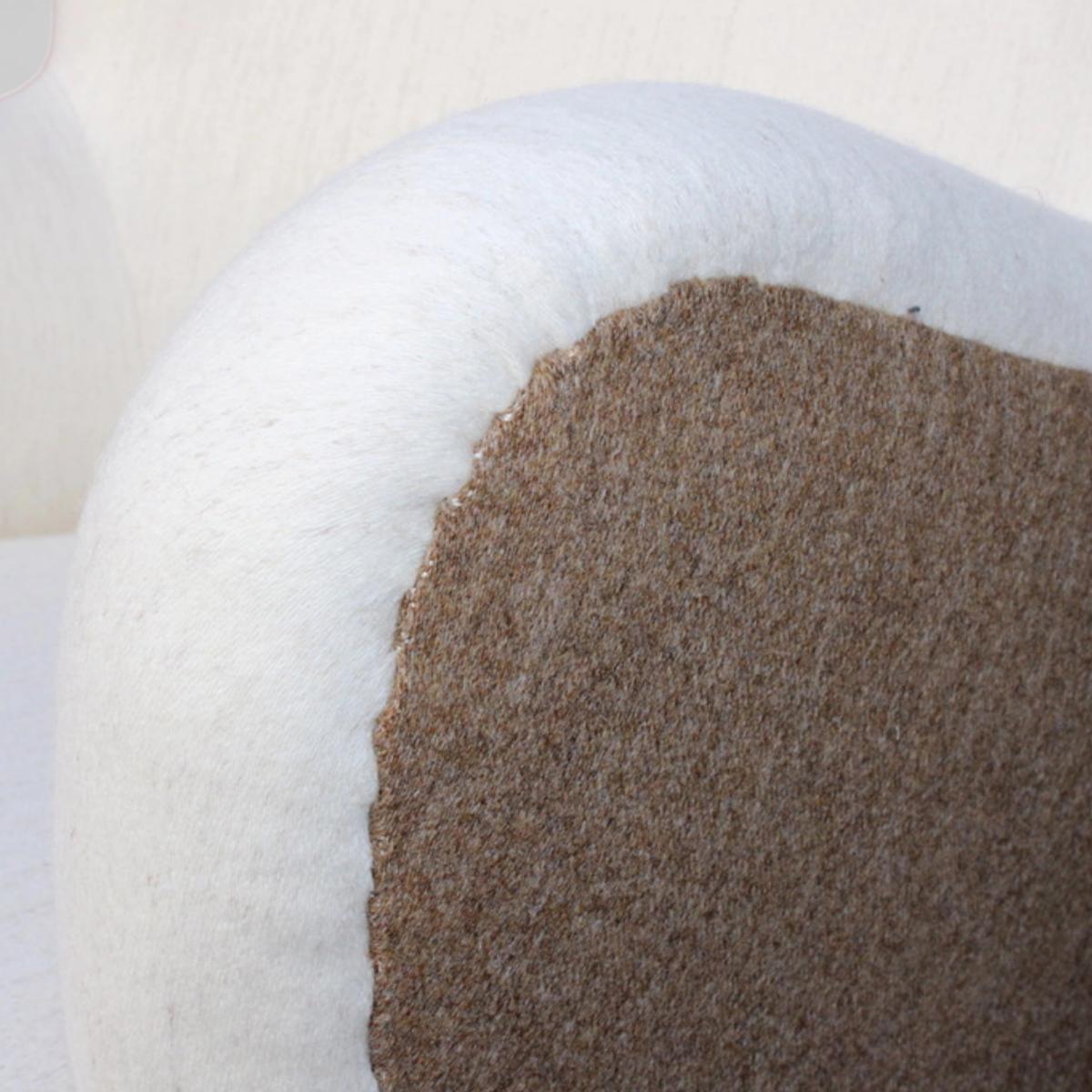
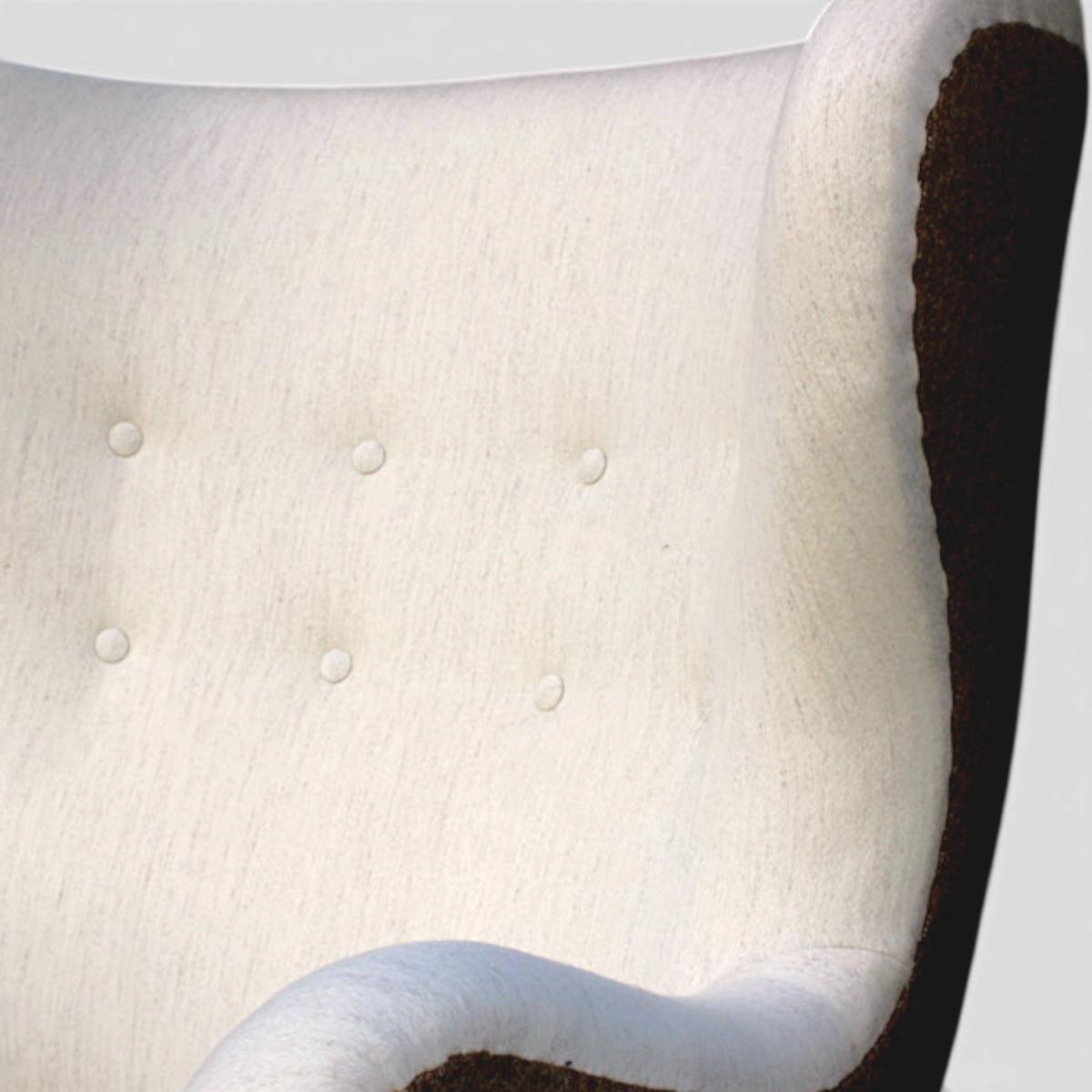
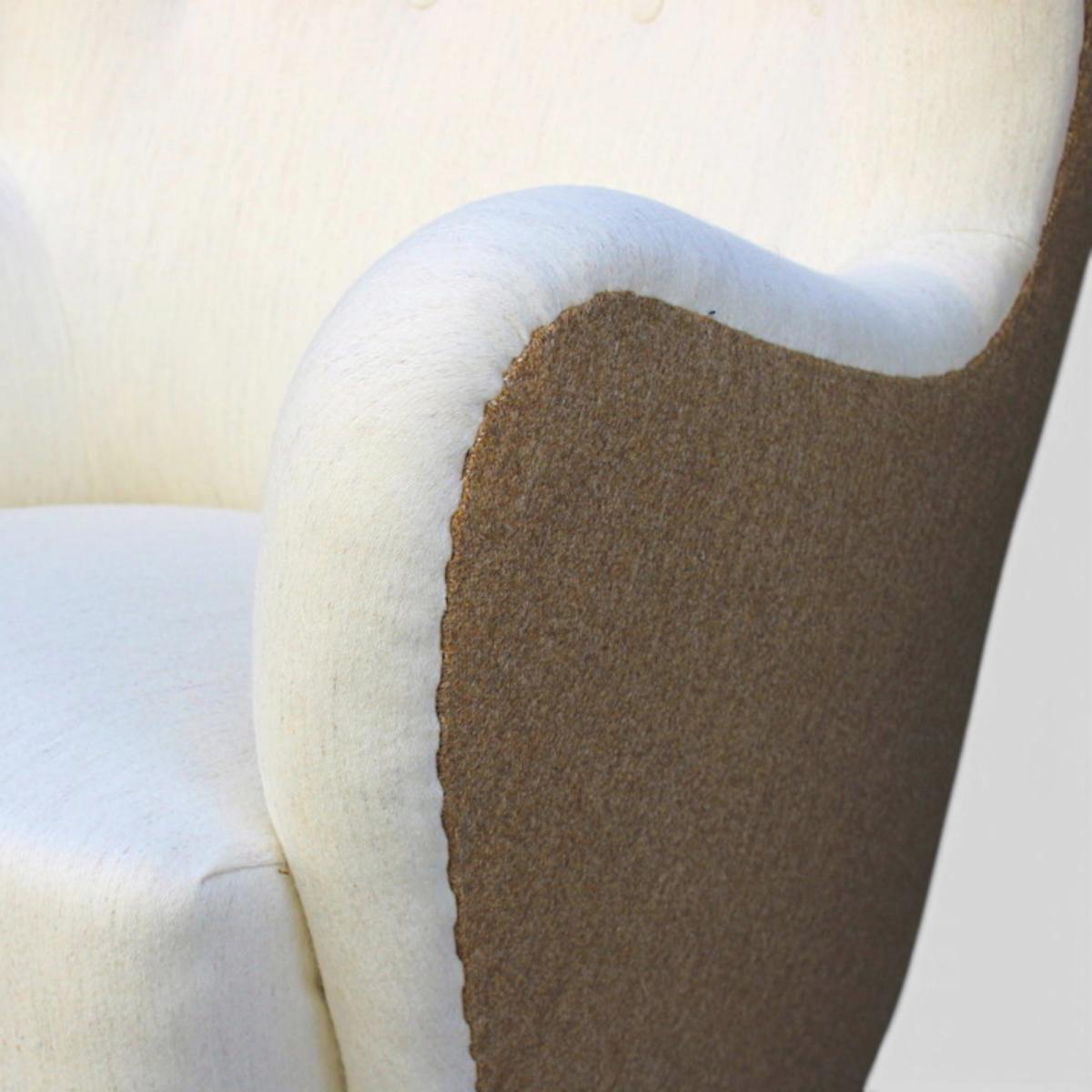
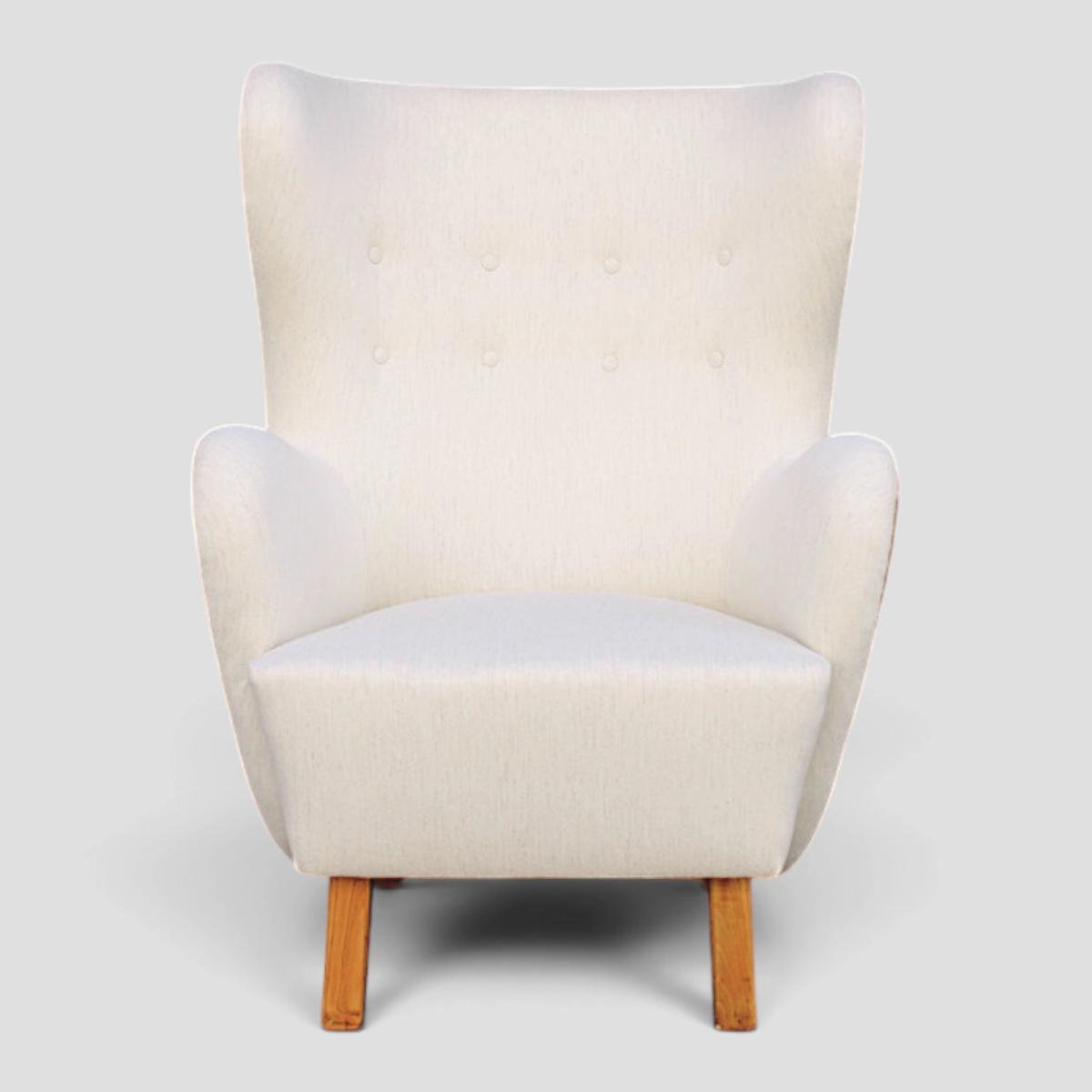
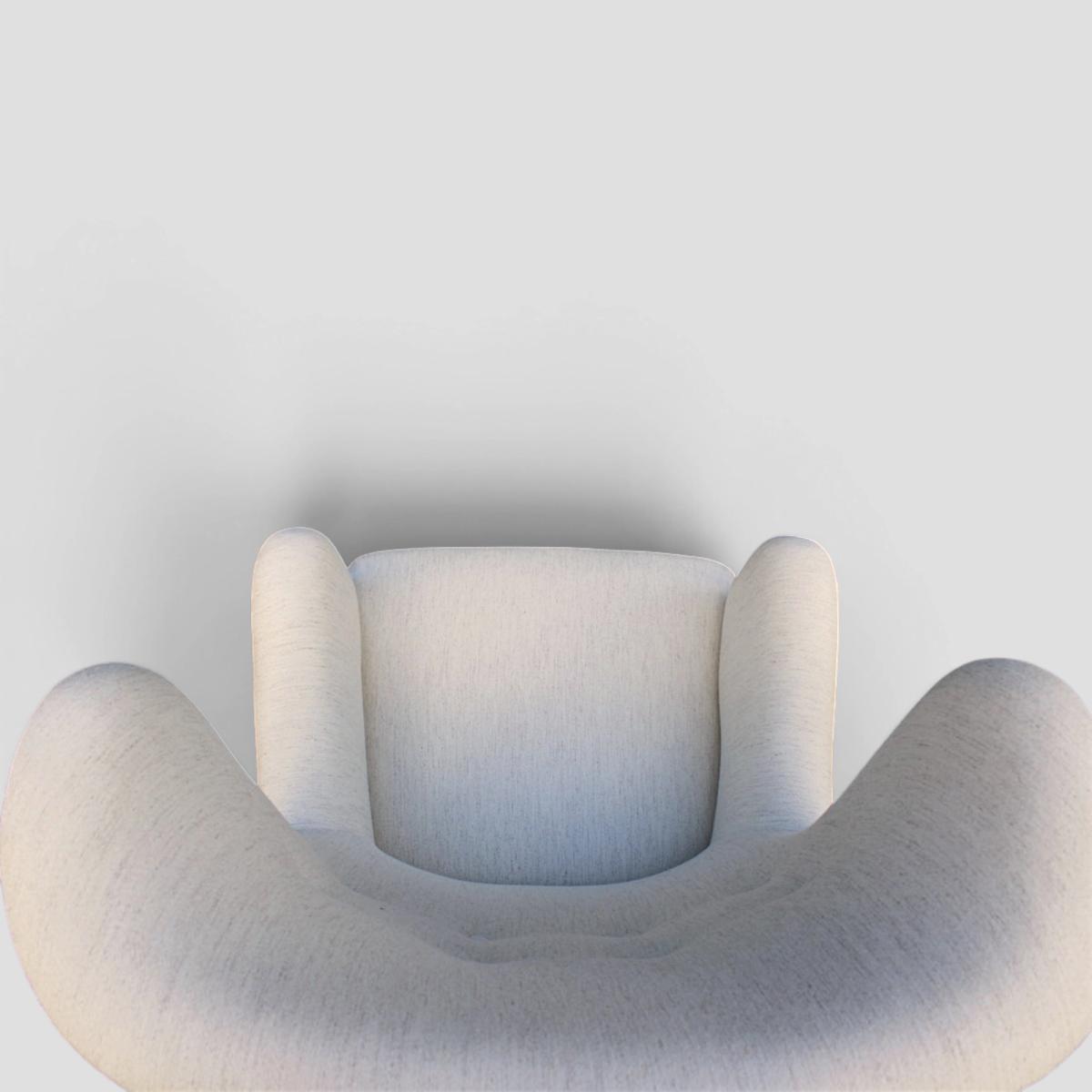
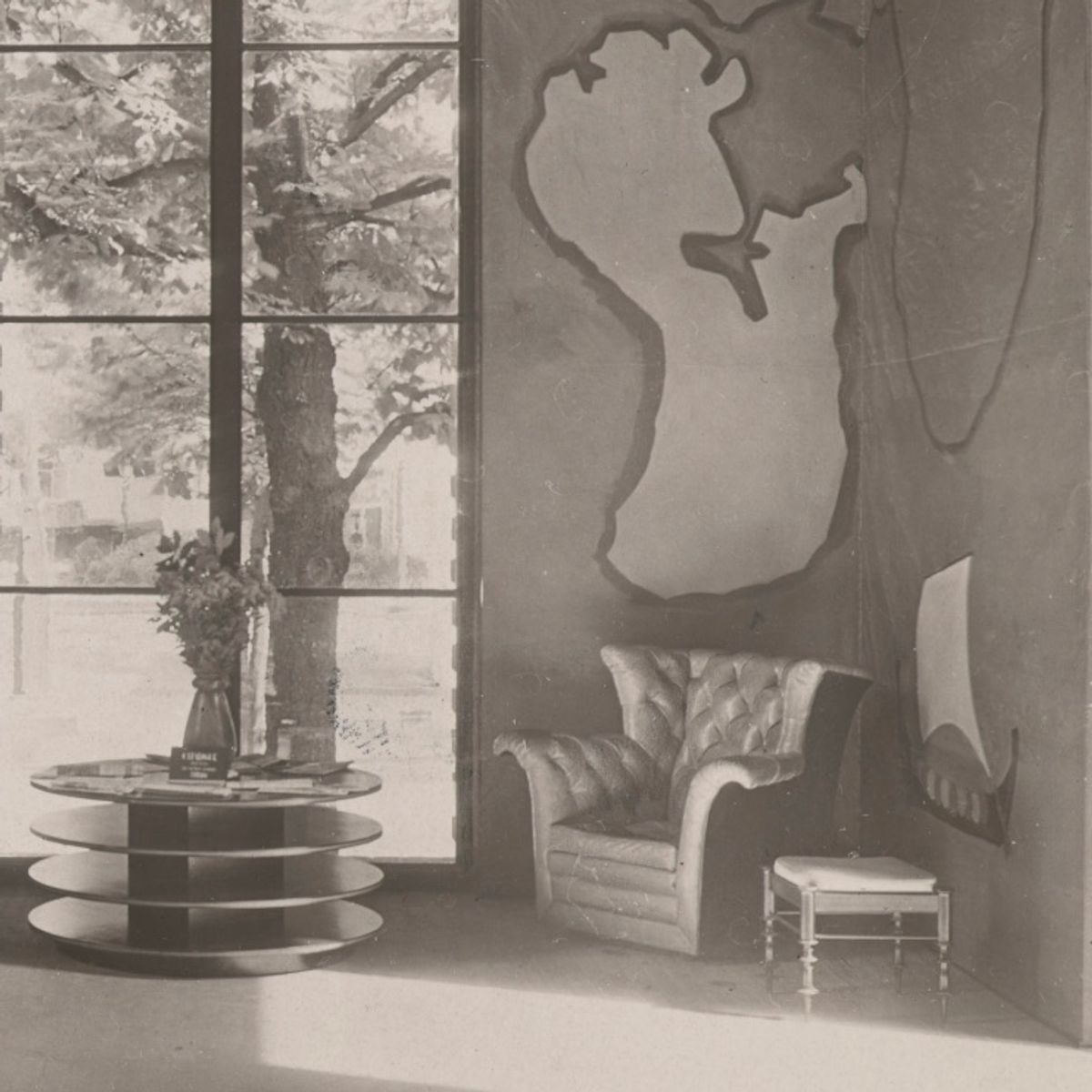
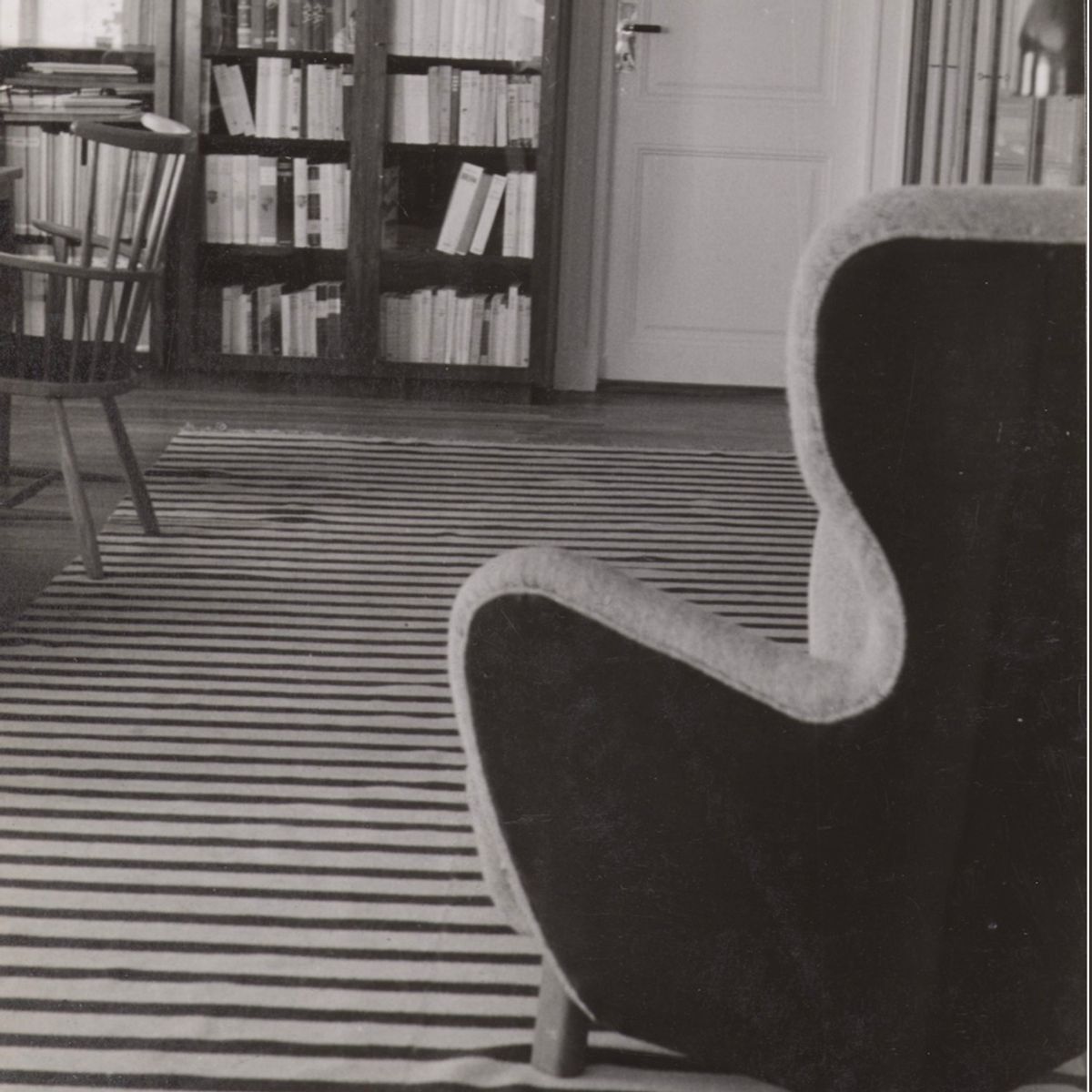
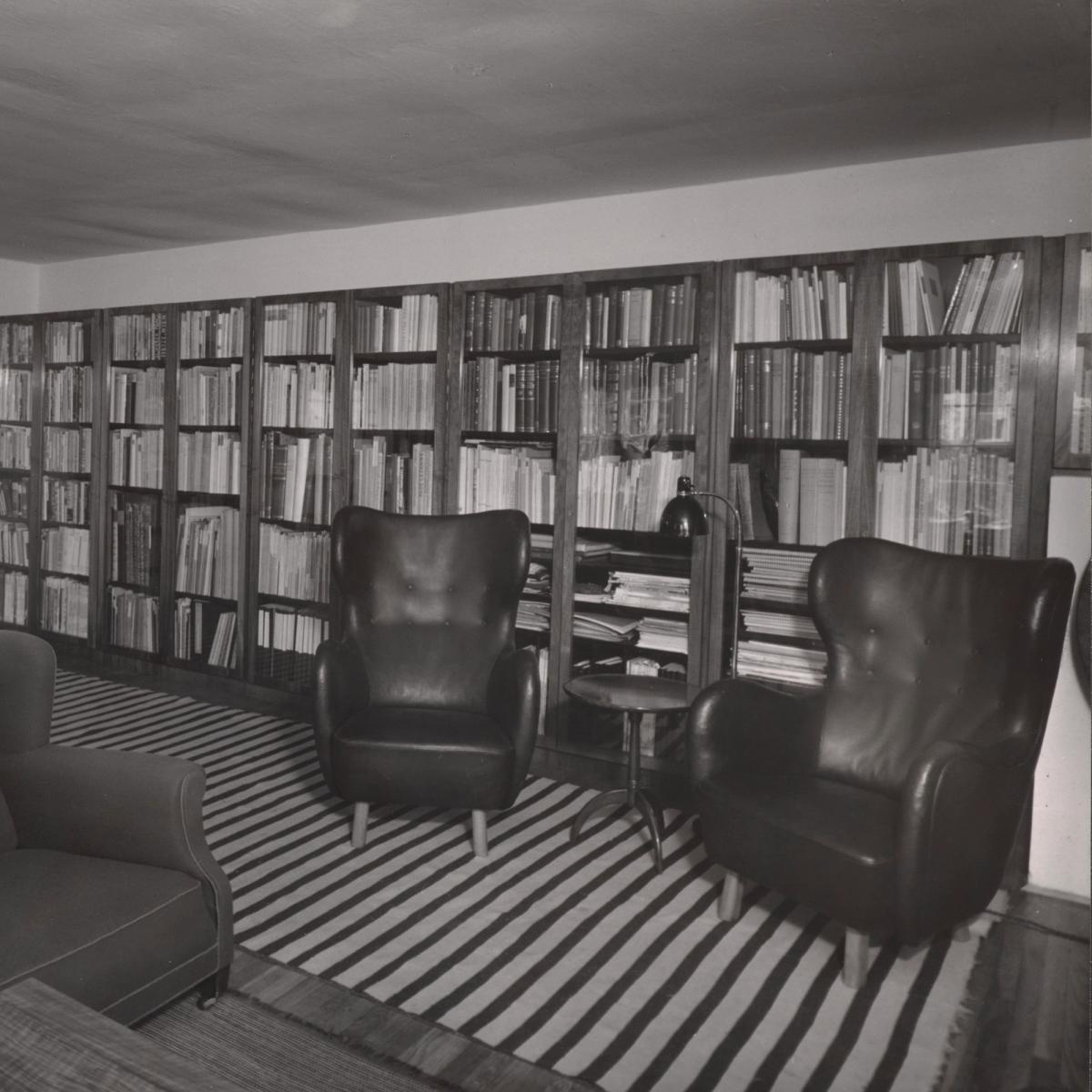
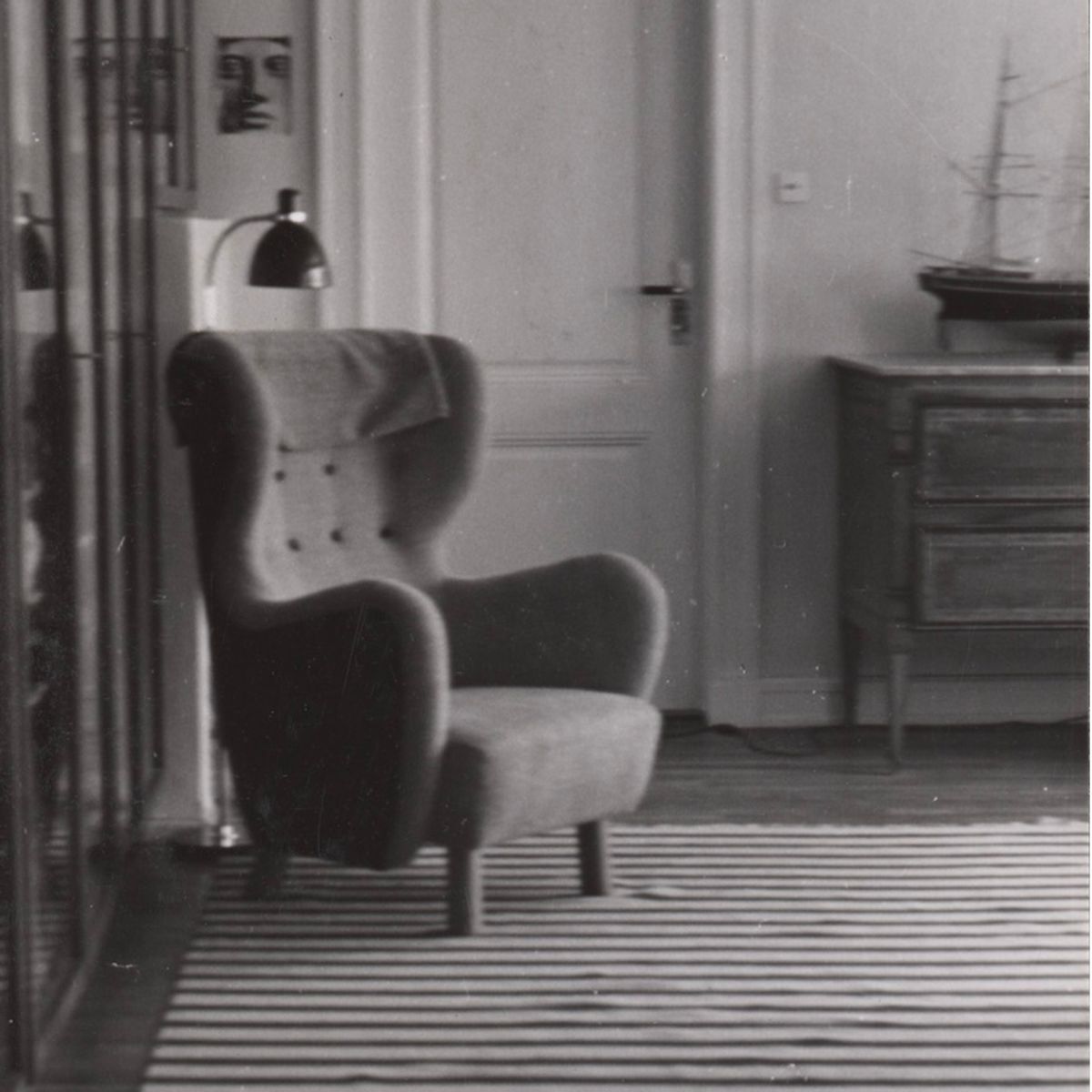
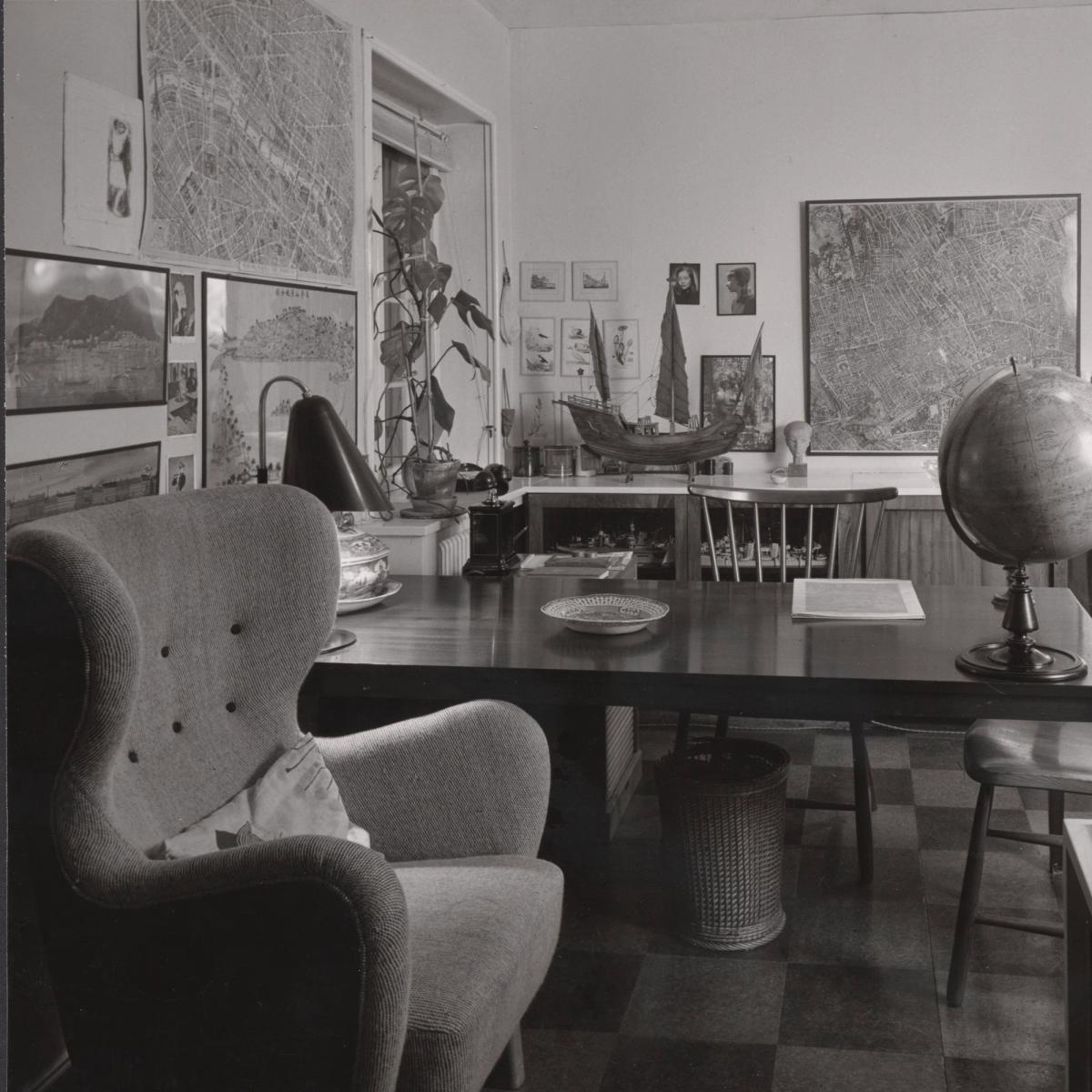
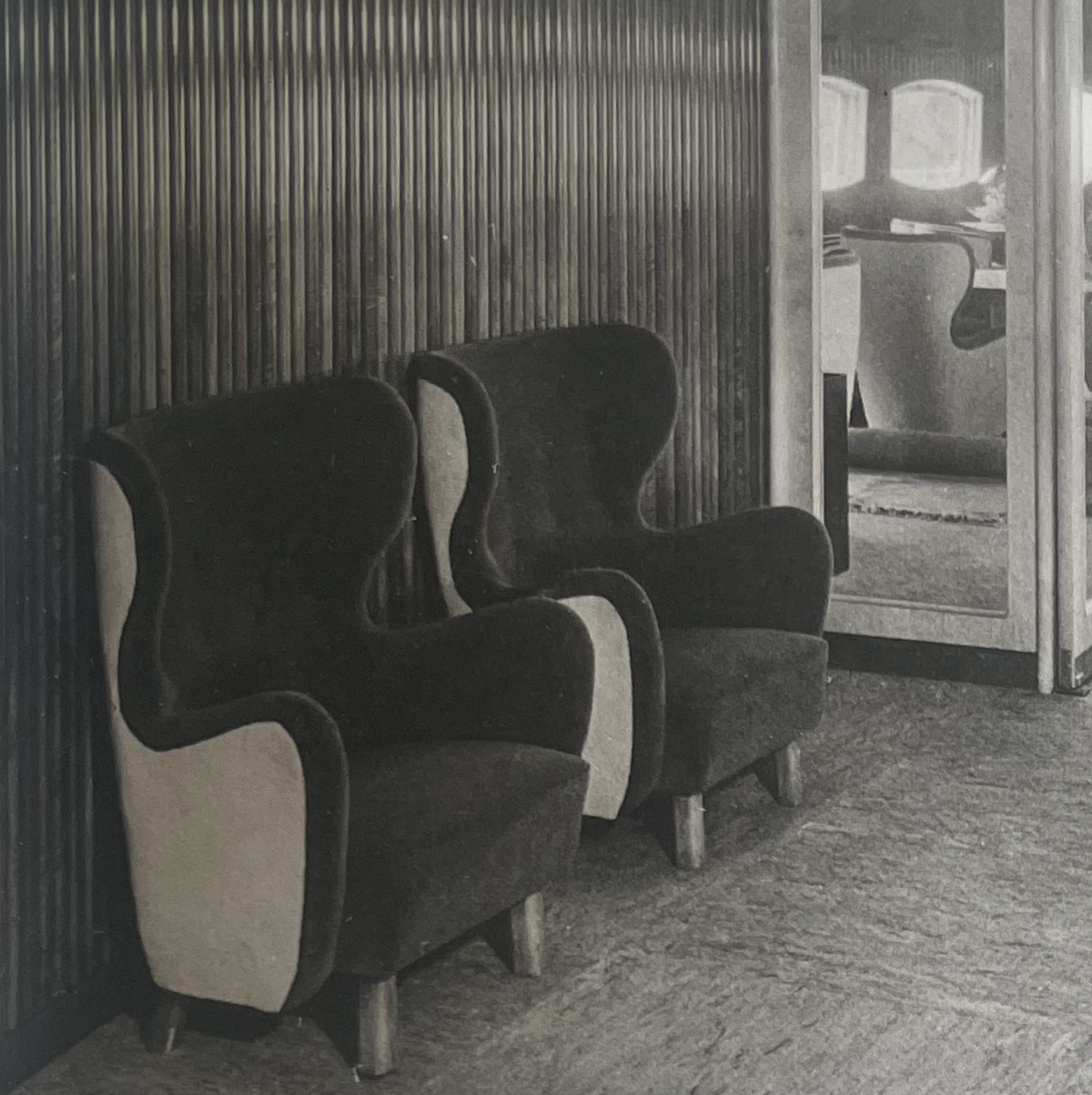
Wingback chair. Legs of Elmwood. Upholstered with Savak Wool fabric from Gabriel in two color tones. Made by Lysberg, Hansen & Terp Part of special order for the First Class lounges on the DFDS ships M/S Kronprins Olav, Ms Kronprins Frederik & M/S Kronprinsesse Ingrid. Kay Fisker is among the most influential Danish Modernist architects of the 20th Century. He was a professor at the school of architecture at the Danish Royal academy of art. He is behind countless landmark buildings in Denmark, that define much of the Danish humanistic and quiet version of modernism, as It evolved in his era. While his architecture has been praised and described, until recently the important furniture designs he made for so many of his interiors have only been described superficially over the years. His furniture were special commissions for specific projects or interiors and while many of his buildings have been preserved, most of the original interiors are gone. Today only a fraction of his furniture designs are known still to exist. One his earliest and more spectacular works was the Danish Pavilion at the 1925 Paris World Exposition, a monument to modernism and that most Danish of materials - Bricks. He did also for this pavilion design furniture for the interior. Pieces that in line with the period combine elements of Modernism, with Neo-classicism. But specifically for the chairs in the pavilion he used a feature that he would return to in later chairs including this present piece. The clear distinction between interior and exterior of chair with the use of different colors, and types of fabric/leather This chair was part of the rather luxurious interiors he was tasked with for the accommodation of the 3 ferries between 1936-40 . While Fisker as such opposed the idea of luxury as a true modernist, he instead tried to turn the interiors of the ferries into examples of craftsmanship and a modern way of living, all under under the constraints of the job. This chair is Kay Fiskers contribution to the short-lived but important tendency among Danish modernists around 1935-40 to make organic sculptural overstuffed easy chairs. But given its intended use on limited space it is quite upright and not huge in size while still offering a private space while seated The chair also become a personal favorite of Kay Fisker and he had several examples in his own home. While probably more than initially 100 have been made, today only two examples of the chair are known to exist . One of the ferries sunk after being sold off in the late 1960s and the others were also sold off and were eventually scrapped in India and Italy. And so the interiors have disappeared The present chair must have been removed at some point earlier from one of the ferries. One leg has a filled drilled piercing where it formerly have been fixated to floor inside ship. Price on request
1 — 17